
Bird populations are in steep decline
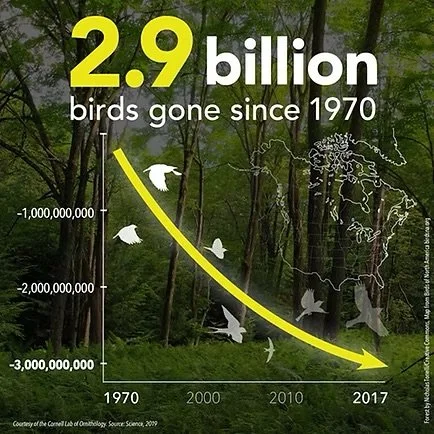
The North American bird population is down by 2.9 billion breeding adults, with devastating losses among birds in every habitat.
Most birds migrate at night
Birds use the sun, moon and stars to navigate, and artificial light can interfere with these signals. Migratory birds drawn in by city lights at night are at high risk of colliding with buildings. Building collisions are killing well over one billion birds annually in the United States alone.
Source: Loss et al. 2014. The Condor.
Charlotte is the 19th riskiest city for migrating birds
Tens of millions of birds migrate across Mecklenburg County each spring (March-May) and fall (Sept-Nov). Birds travel north in the spring to access plentiful food and nesting sites and return south to their winter homes in the fall. Current research estimates that between 350 million and 1 billion birds die each year from building collisions in the U.S. alone. Bright nighttime lights can disorient migrating birds, causing them to crash into structures or trapping them in beams of light where they become exhausted.
Source: Horton et al. 2019. Frontiers in Ecology and the Environment.

Project Lights Out Charlotte
A simple and effective way to make Charlotte safer for birds is to turn out the lights! Lights Out Charlotte is modeled after other successful programs in Atlanta, Austin, Nashville and Raleigh. This initiative works with building owners, managers, employees and tenants, and local government to reduce light pollution by extinguishing exterior architectural and unnecessary nighttime building lighting during migration periods. This simple action has the potential to dramatically reduce the number of bird fatalities caused by nighttime lights.
What to do?
The solution is simple: turn off or reduce nighttime lighting during migration.
Lights Out from 11 PM to 6 AM
March 15-May 30 for Spring Migration
September 1-November 30 for Fall Migration
Then and Now: Wing Haven’s History of Keeping Charlotte’s Skies Safe for Birds
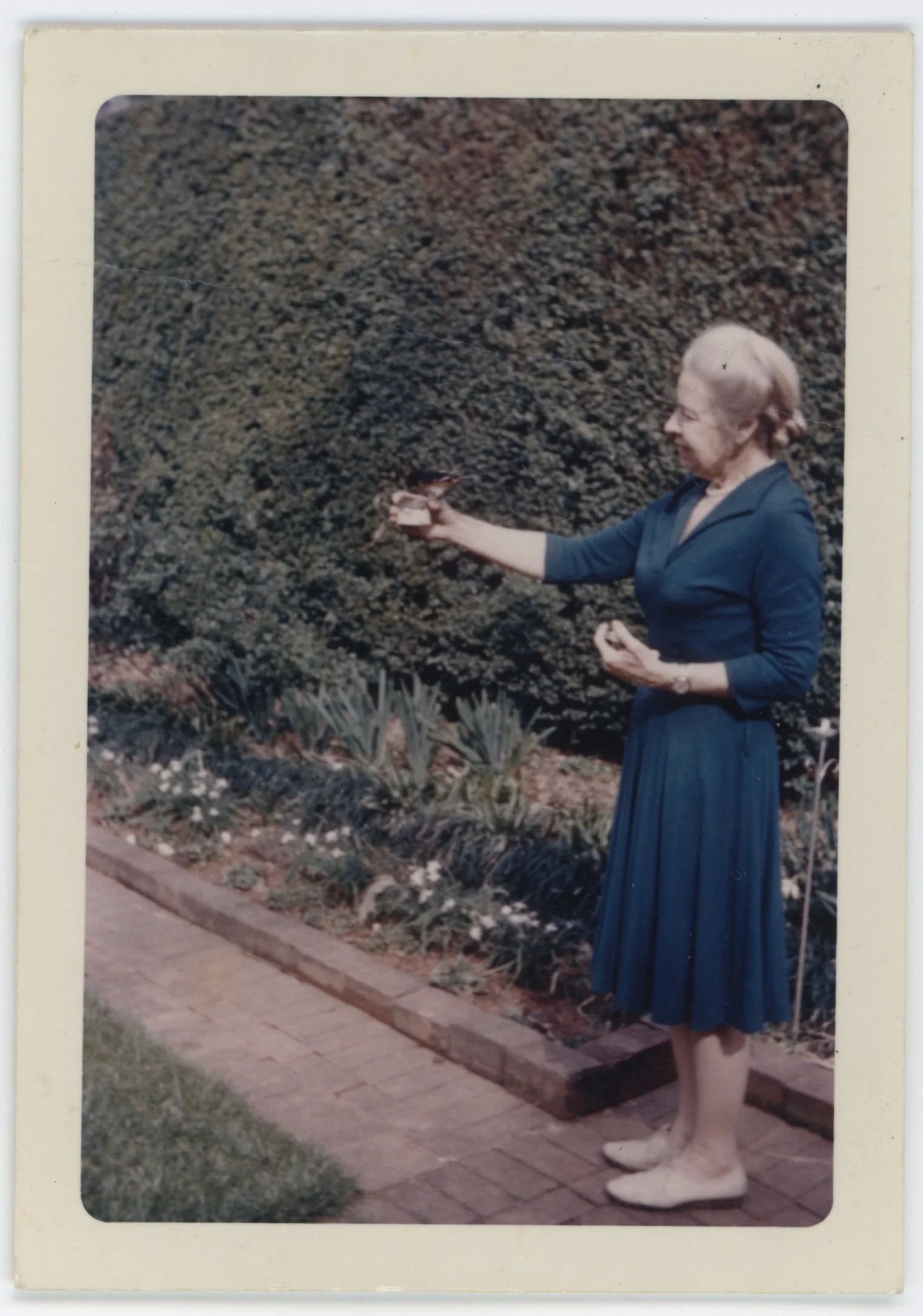
Elizabeth Clarkson with an Eastern Towhee. Circa 1960s
In the 1950s, Elizabeth Clarkson was a consultant for the city after hundreds of birds mysteriously fell from the sky around the Douglas Municipal Airport. After extensive research done by ornithologists, biologists and naturalists like Elizabeth, they theorized the birds were suffering from spatial disorientation. A new ceilometer the airport was using to measure the cloud ceiling was casting a bright beam of light, confusing the birds until they fell, ultimately killing the birds.
Elizabeth’s work resulted in information that was shared with the Fish and Wildlife Service and the National Department of the Interior. In turn, the U.S. Weather Bureau and National Department of the Interior issued an Information Service Announcement in December 1955 that instructed personnel to power down unfiltered vertical searchlight beams at airports during heavy migration seasons provided it could be done without endangering air travel. Fortunately, since 1998, the newer ceilometers used at CLT and other airports utilize entirely different technology with light that is invisible to both human and avian eyes.
Elizabeth Clarkson would have been in the forefront of the Bird Safe/Lights Out initiatives, and we are honored to continue her legacy by participating in this effort in Charlotte today.